
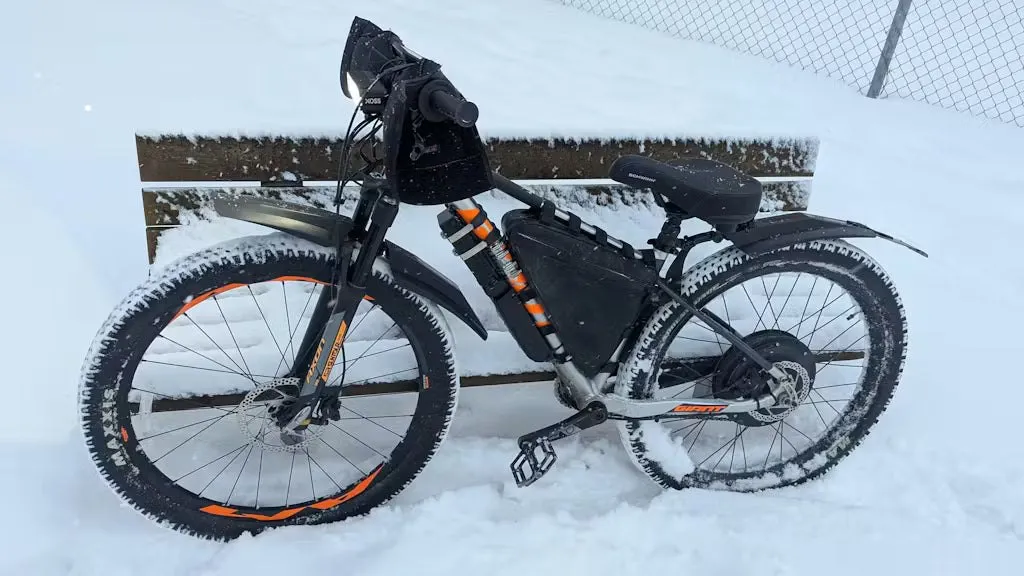
 A customer’s fat-tyre conversion. Fat-bike frames need the matching 175 mm or 190 mm motor version.
Sort out where you will ride before you buy a 72V kit. In Great Britain a bike like this is not a pedal cycle in law, so the road, the cycle path and the local trail centre are all off the table. What is left is private land where the owner has said yes, and venues that accept high-power electric bikes.
Get that answer first and the build becomes easier. The venue tells you how fast you can go, which tyres and protective kit it expects, whether you can charge on site and how long your sessions last. Those facts should shape the bike, not the other way round.
Key takeaways
- A 72V ebike is not a pedal cycle in Great Britain. Ride it on private land with the owner’s permission, or put it through motorcycle approval, registration and insurance.
- “Private land” excludes public footpaths, bridleways, common land and car parks open to the public, even when they are privately owned.
- Choose the venue before the kit. The venue’s rules decide speed, protective kit, tyres, charging and session length.
- A 72V 20Ah battery holds 1,440 Wh: about an hour of brisk riding, or around 20 minutes at the 60A controller’s full output.
- Police can seize off-road machines ridden without authority on footpaths, common land or roads, and a limit mode on the display is no defence.
Why a 72V bike is not an ebike in law
An electrically assisted pedal cycle in Great Britain needs working pedals, a motor with a continuous rated power of no more than 250W, and assistance that cuts out at 15.5 mph. A bike that can be propelled without pedalling above walking pace also needs type approval.
A 72V 4000W conversion is far outside all of that. GOV.UK is clear about what follows: a bike that does not meet the rules is treated as a motorcycle or moped. On a road it would need registration, tax, insurance, a licence, a motorcycle helmet and the lights and equipment that go with them. Few conversions can meet those requirements in practice.
A lower speed setting does not change this. The Department for Transport’s guidance specifically says that bikes with a switchable “off-road” mode do not, in its view, comply with the EAPC rules. Limit mode is a riding setting, not a legal one.
This article covers Great Britain. Northern Ireland and other countries have their own rules.
72V ebike on private land: what permission actually covers
“Private land” sounds simple and often is not. Three situations catch people out:
- A field with a public footpath or bridleway across it. The landowner can allow you on the field, but not on the right of way.
- A private car park open to the public. Being privately owned does not make it a closed site.
- A trail centre or bike park. Most welcome bicycles and many welcome legal ebikes. That does not mean they accept a 4000W machine, so ask.
Police forces regularly seize off-road bikes ridden on footpaths, parks and common land, and the same powers apply to an unregistered high-power ebike. Written permission from the landowner protects you on their land and records the boundaries. It does not extend to the lane you use to get there.
What the police can actually do
Riding a high-power ebike in the wrong place is not a grey area. Under section 34 of the Road Traffic Act 1988, driving a mechanically propelled vehicle without lawful authority on common land, moorland, a footpath, a bridleway or a restricted byway is an offence. Under section 59 of the Police Reform Act 2002, police can seize a vehicle that is being used carelessly or in a way that causes alarm, distress or annoyance, on or off the road. And a machine ridden on a road without the registration, licence and insurance it legally needs can be seized under section 165A of the same 1988 Act.
None of those depend on how the display is set. They depend on what the vehicle is and where it is ridden. Written permission from a landowner, with the boundaries marked, is the simplest protection you have.
Choosing a venue
The most practical places to ride are sites that already handle powered off-road machines: motocross and enduro tracks with electric sessions, some farms and estates that host trail days, and private land where the owner has agreed in writing. When you contact them, describe the bike honestly: 72V, around 4000W, throttle-operated, hub-motor conversion, and its total weight. Calling it an “electric bike” gets you an answer meant for a 250W commuter.
Questions worth asking before you book:
- Do you accept converted bicycles at this power level?
- Is there a speed limit, an age limit or a separate area for electric machines?
- What protective equipment do you require: full-face helmet, body armour, boots?
- Does your insurance cover modified vehicles, or do I need my own cover?
- Can I charge on site, and where?
Insurance and liability
Ordinary home or bicycle insurance rarely covers a 4000W machine, and most cycling insurers exclude modified high-power ebikes. Before your first session, check three things:
- The venue’s insurance. Ask whether it covers riders, and whether it excludes converted bicycles or electric machines.
- Your own cover. Some motorsport and off-road insurers offer personal accident and third-party policies for track and private-land riding. Tell them exactly what the bike is.
- The landowner’s position. If a friend or farmer lends you land, they may need to tell their own insurer. A short written agreement protects both of you.
Protective kit for 50 mph
The 72V kit discussed below lists 50–55 mph on private land. That is motorcycle speed, so dress for it: a full-face helmet tested to ECE 22.06, impact-rated body armour or a roost deflector, knee and elbow protection, gloves and boots that cover the ankle. Many venues insist on this list anyway. A cycling helmet is designed for a fall at cycling speed and is not the right tool here.
Getting there is part of the plan
The riding area may start well beyond the car park, and the lane between them is a public road. Plan to push or carry the bike across it, or arrange unloading inside the site.
In the car, use a rack rated for the bike’s weight. A 72V conversion can weigh well over 35 kg, more than many towbar racks allow. Remove the battery for the journey, protect its terminals and keep it secured inside the vehicle rather than on the rack.
Build the bike for the ground
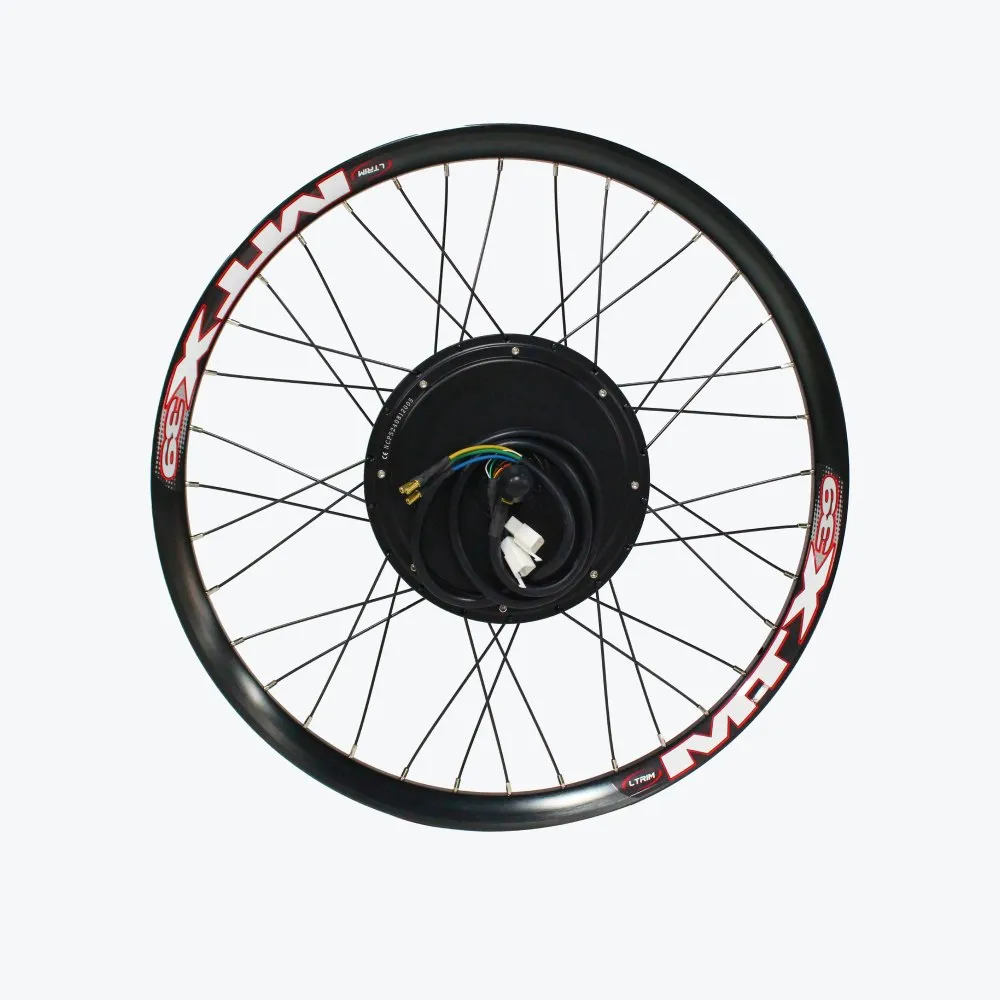 The 72V 4000W motor wheel, sold for 135 mm, 142 mm and fat-bike dropouts.
Once you know the venue, choose the kit to suit it. The KirbEbike 72V 4000W conversion kit shows the kind of choices involved:
- Dropout width. It is sold for 135 mm and 142 mm rear dropouts on 26, 27.5 and 29-inch wheels, and in 20 × 4.0-inch fat-bike versions for 175 mm and 190 mm dropouts. Measure yours; a fat-bike frame needs the fat-bike motor.
- Gearing. The 135 mm version runs a single sprocket and the 142 mm version a 7-speed freewheel. Neither changes how hard the motor pulls, but pedalling still helps on the climbs.
- Controller and battery. It uses a 60A controller with a 72V 20Ah battery, which charges to 84V. The battery management system needs to be rated for that 60A continuously.
- Weather. The kit lists an IP54 rating. That is splash resistance, so avoid deep water and pressure washers.
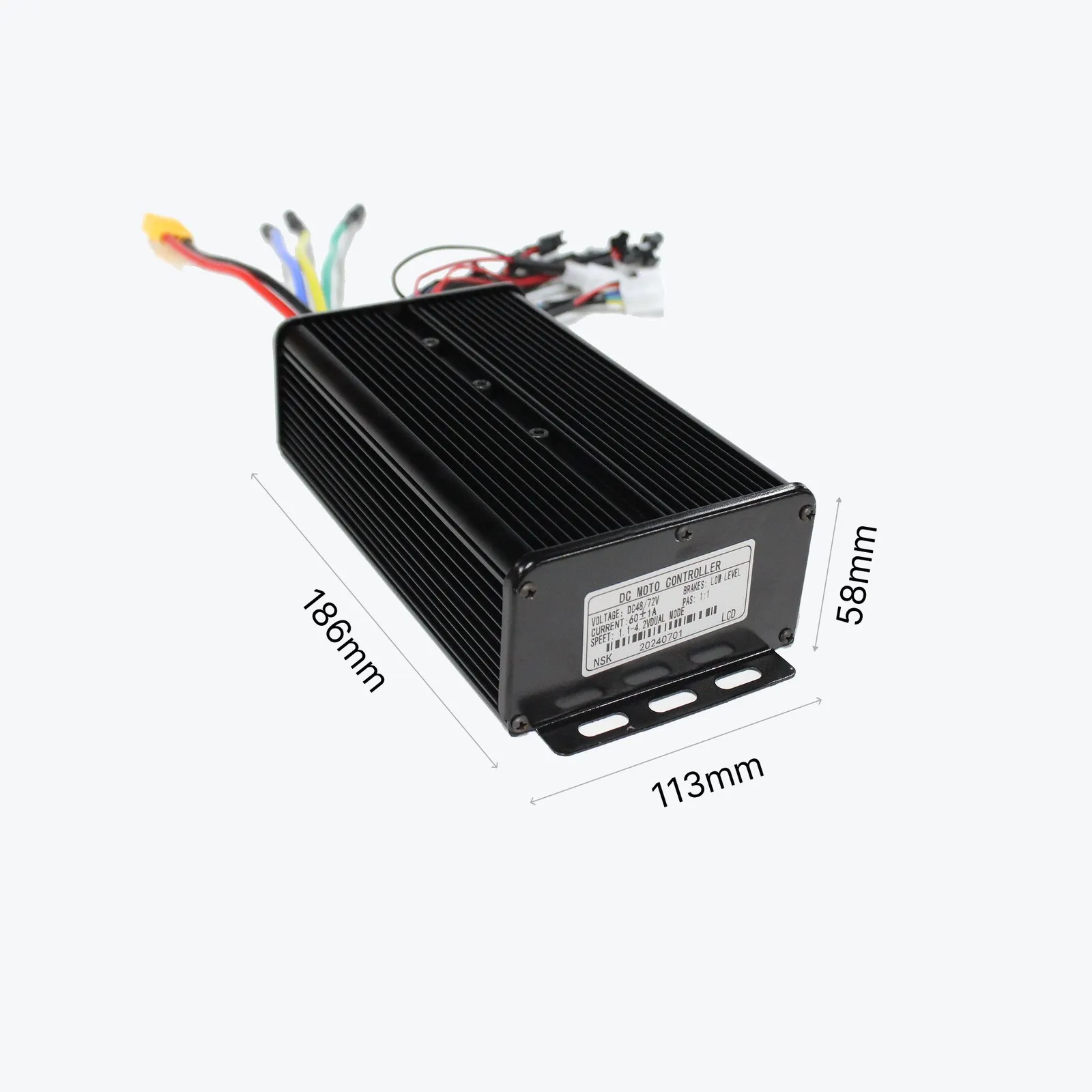 The 60A controller. Decide where it mounts and how it stays cool before the build, not after.
The donor bike matters as much as the kit. At the listed 50–55 mph, the energy a set of brakes has to absorb is more than ten times what it would be at 15 mph. That calls for hydraulic disc brakes with large rotors and sintered pads, motorcycle-style tyres or e-bike tyres rated for the speed, a strong frame with steel or reinforced dropouts, and a torque arm on each side of the axle.
Plan sessions in minutes, not miles
Range figures are less useful at a track than run time. A 72V 20Ah battery holds 1,440 Wh. Keep about 20% in reserve and you have roughly 1,150 Wh to use. At an average draw of 1,200 W, which is brisk riding with plenty of standing starts, that is just under an hour. At 2,400 W of hard riding, it is under 30 minutes. At the controller’s full 60A, the pack would last only about 20 minutes.
So for a first day, plan short sessions, come back with charge in hand, and record how much each session used. A second battery only helps if it is the same specification, can be carried safely and the venue lets you charge or swap on site.
Settings that help on a closed site
A Bluetooth-programmable controller is useful here because you can match the bike to the ground:
- First outing: gentle throttle response and a lower speed cap while you learn how the bike behaves on that surface.
- Loose or wet ground: softer acceleration, so the rear tyre does not spin up on every start.
- Long sessions: a lower battery-current ceiling, which reduces heat and stretches the battery.
Change one setting at a time, note what you changed, and keep the original configuration so you can go back. Settings help control; they cannot make undersized brakes or a weak frame safe.
Look after it between sessions
High-power bikes reward a quick check before every ride: axle nuts and torque arms, spoke tension, brake pads and rotors, tyre pressure, the battery mount and any wiring that could rub. Recheck everything after transport, and after any wheel removal.
Heat builds on slow, steep climbs and repeated hard starts. If power fades or the controller cuts out, stop and let the system cool. For charging, use the matched charger, do it where you can watch it, keep it away from exits and flammable material, and never charge a battery that is damaged, swollen or hot.
When the venue, the bike and the plan all line up, KirbEbike can help match a kit to your frame and riding area, which is a better starting point than simply asking for the most powerful option.
A first-session checklist
- Written permission or a confirmed booking, with the riding area marked.
- Bike checked: axle nuts and torque arms tight, brakes bedded in, tyres at the right pressure, spokes even.
- Battery charged at home, carried separately in the car, terminals covered.
- Protective kit on before the bike is unloaded.
- Controller set to a gentle profile and a lower speed cap for the first laps.
- A plan for the session: short runs, a break every 15–20 minutes, and enough charge left to ride back to the van.
- A note of what each session used, so the next visit can be planned from real numbers.
Questions to settle before the first visit
Does a 25 km/h setting make a 72V bike road legal?
No. The motor’s rating and the bike’s construction decide its legal category, not a display setting.
Is the landowner’s permission enough?
On their land, and within its boundaries, yes. It does not cover public footpaths, rights of way or the road to get there.
Can I ride at a trail centre?
Only if the operator says yes for your actual bike. Permission for bicycles or legal ebikes does not extend to a 4000W machine.
What should I buy first?
A confirmed place to ride, then a suitable donor bike, then the kit.
How fast is a 72V 4000W ebike?
The kit discussed here lists 50–55 mph on private land. Actual speed depends on wheel size, rider weight, gearing, battery charge and controller settings.
Do I need a licence to ride a 72V ebike on private land?
Not on private land with permission. On a road it would be treated as a motorcycle or moped, needing registration, tax, insurance, a licence and approved equipment.
Can I ride a 72V ebike on a bridleway or footpath?
No. Driving a mechanically propelled vehicle on a footpath, bridleway or common land without lawful authority is an offence, and the bike can be seized.
Sources
- UK Government, “Riding an electric bike: the rules” (gov.uk)
- Department for Transport, “Electrically assisted pedal cycles (EAPCs) in Great Britain: information sheet” (gov.uk)