
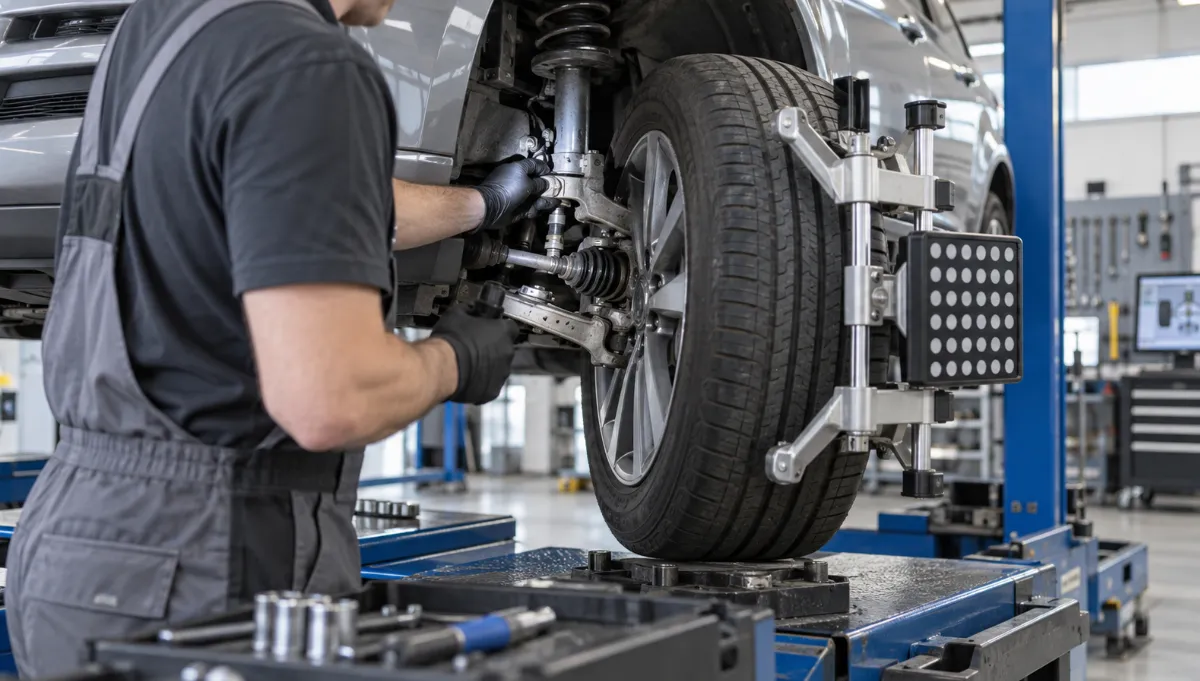
When a car pulls to one side, feels unstable, or starts wearing out tires unevenly, it is easy to blame the wheel alignment. However, the real cause may be somewhere in the suspension.
Alignment and suspension problems can create similar symptoms. They can also affect each other. Knowing the common warning signs can help you explain the issue clearly and avoid replacing the wrong parts.
What Is a Wheel Alignment?
Wheel alignment refers to the angles of the wheels in relation to the road and each other. These angles affect how the vehicle travels, handles, and wears its tires.
A car can lose its proper alignment after hitting a pothole, driving over a curb, or traveling on rough roads. Normal wear may also cause the alignment to change slowly.
Common signs of an alignment problem include:
-
The vehicle pulls to the left or right
-
The steering wheel sits crooked while driving straight
-
Tires show uneven wear along one edge
-
The car wanders slightly on a level road
-
Steering feels different after hitting a pothole
A small amount of road slope can cause a car to drift. However, a strong or constant pull may point to an alignment problem.
What Is a Suspension Problem?
The suspension connects the vehicle’s body to its wheels. It includes parts such as shocks, struts, springs, control arms, bushings, and ball joints. These parts help the tires stay in contact with the road while keeping the ride stable.
Suspension components wear out over time. They can also become bent or damaged after a hard impact.
Common signs of a suspension problem include:
-
Clunking or knocking sounds over bumps
-
Too much bouncing after hitting a dip
-
A rough or uncomfortable ride
-
One corner of the vehicle sits lower
-
The front of the car dips heavily during braking
-
Steering feels loose or unstable
-
Uneven tire wear returns after an alignment
Worn suspension parts can allow the wheels to move out of position. Because of this, a vehicle may not hold its alignment even after it has been adjusted.
How Can You Tell the Difference?
Pay attention to when and how the problem happens.
If the car drives smoothly but pulls to one side, the problem may be related to alignment. A crooked steering wheel and steady tire wear on one edge are also common alignment clues.
If you hear noises, feel extra bouncing, or notice loose steering, the suspension may need attention. Vibrations and changes in ride height can also point to worn or damaged parts.
Still, these clues are not enough to confirm the exact cause. A worn ball joint, damaged control arm, or weak strut can change the wheel angles. In that case, performing an alignment without repairing the suspension first will not provide a lasting result.
Could the Tires Be Causing the Problem?
Not every pull or vibration comes from the alignment or suspension. Tires can create many of the same symptoms.
Low tire pressure may cause the car to pull toward one side. Uneven tread, internal tire damage, or a poorly balanced wheel may create shaking or noise. Before assuming there is a larger problem, check the tire pressure and inspect the tread.
Brakes may also cause pulling. For example, a sticking brake caliper can make the vehicle move toward one side while driving or braking.
Why an Inspection Should Come First
A suspension inspection should usually happen before a wheel alignment. If a part is loose, bent, or badly worn, the alignment readings may not stay within the correct range.
During an inspection, a technician may check the shocks, struts, bushings, ball joints, tie rods, springs, and wheel bearings. The tires should also be checked for unusual wear and proper pressure.
After any needed suspension repairs are completed, the wheels can be aligned to the proper settings.
Final Thoughts
An alignment problem usually causes pulling, a crooked steering wheel, or uneven tire wear. A suspension problem is more likely to cause noises, bouncing, loose handling, or changes in ride height.
Sometimes, both issues are present. Since suspension damage can affect wheel alignment, a full inspection is the safest place to start. Finding the actual cause early can improve handling, protect the tires, and help keep the vehicle safe on the road.
This post was written by a professional at Tires2Go Florida. Tires2Go Florida is a trusted automotive service center located in Pinellas Park, Florida, serving drivers across St. Petersburg, Tampa, Clearwater, and Largo. Our certified mechanics handle tire and wheel replacement, brake service, suspension repairs, oil change Clearwater, wheel alignments, tire balancing, and road force balancing. We also specialize in ADAS calibration, suspension modifications, lift kits, and lowering kits using quality parts and modern diagnostic equipment. From routine maintenance to advanced automotive services, Tires2Go Florida provides dependable solutions and tires for sale for vehicles throughout the Tampa Bay area.